


Unveiling the History of South Africa’s Stunning Rock Art
Unveiling the History of South Africa’s Stunning Rock Art” invites you on an awe-inspiring journey through time, exploring the captivating rock art that decorates the landscapes of this incredible nation. As you delve into the rich history behind each site, you’ll discover how these ancient paintings and carvings provide a fascinating glimpse into the lives, beliefs, and stories of the early inhabitants of South Africa. Get ready to unlock the secrets that these timeless works of art hold, and feel a deeper connection to the human spirit across the centuries. Have you ever wondered about the mysteries etched into South Africa’s stunning landscapes? Well, you’re in for a treat because today we are diving deep into the history and splendor of South Africa’s rock art. Let’s embark on this exciting journey together and unveil the rich story behind these ancient masterpieces!
The Timeless Magic of South African Rock Art
Rock art in South Africa is not just about pretty pictures on ancient rocks. No, it’s a magical blend of history, culture, and mystery. Imagine ancient people using rocks as their canvas to narrate stories, depict everyday life, and express their beliefs. Cool, right?
What is Rock Art?
To start, rock art includes two main types: paintings and engravings. They aren’t exactly graffiti or those stick figures you drew in school. These are intricate, often colorful, renderings created by indigenous people thousands of years ago. They primarily used ochre, charcoal, and other natural pigments to create these stunning visuals.
Who Created These Ancient Masterpieces?
Spoiler alert: It’s not aliens! The rich heritage of South African rock art comes from the San and Khoi people, also known as the Bushmen. They were incredibly skilled artists, using the natural landscape as their canvas to create images that have stood the test of time.
The History Behind South Africa’s Iconic Rock Art Sites
South Africa is like the Louvre of rock art. Different regions boast their unique stories and styles. Let’s take a virtual tour and start with a few iconic sites, shall we?
Drakensberg Mountain Range
Located in eastern South Africa, these majestic mountains aren’t just a hiker’s paradise. They are the backdrop for some of the world’s most exquisite rock art. The San people etched their lives and beliefs onto the rocks here thousands of years ago. Picture a giant, historical scrapbook set against jaw-dropping scenery.
The Cederberg Mountains
Out in the Western Cape, the Cederberg Mountains offer hundreds of rock art sites. The art here tells tales of animal migration, hunting, and even shamanistic rituals. The diversity is captivating, giving us a peek into the complex world of the ancient artists.
Blombos Cave
Ah, if caves could talk! Blombos Cave on South Africa’s southern coast is a treasure trove of history. Archaeologists have found engraved ochre stones that date back about 75,000 years, proving that art and symbolic thinking are buried deep within human history.
Wildebeest Kuil Rock Art Centre
Now, if you find yourself in the Northern Cape, make a pit stop at Wildebeest Kuil. It’s a heritage site showcasing Khoi-San rock engravings. This site has an interactive visitor center—perfect for making history a bit more hands-on!
uKhahlamba-Drakensberg Park
Besides its breathtaking landscape, this UNESCO World Heritage site houses a massive collection of San rock art. The art at uKhahlamba-Drakensberg doesn’t just limit itself to aesthetics; it delves into spirituality and shamanism, portraying intriguing trance-like figures.
Wonderwerk Cave
Let’s head up north to Wonderwerk Cave in the Northern Cape. It’s not just rich in rock art; it’s a one-stop-shop for our ancestors’ life stories, dating back 2 million years. Bet you didn’t see that coming!
Gamkaberg Nature Reserve
Located in the Little Karoo, this reserve has a diverse collection of Khoisan rock art, ranging from engravings to colorful paintings that depict scenes of everyday life and spiritual rituals.
Unpacking the Meanings: What Do These Ancient Artworks Tell Us?
So, what do these ancient doodles actually mean? Let’s crack the code together!
Stories of Everyday Life
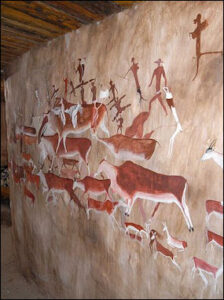
A lot of rock art captures day-to-day activities—hunting scenes, animal migrations, and even community gatherings. Imagine flipping through a photo album, except this album is carved into rock.
Religious and Shamanistic Significance
A significant chunk of the rock art focuses on spiritual and religious themes. Shamanistic figures, often depicted in trance-like states, illustrate the deep spiritual lives of the ancient artists.
Symbolic Representations
Animals like elands (a kind of antelope) frequently appear in these artworks. These aren’t just random doodles; they signify power, fertility, and other spiritual beliefs.
Social Structure and Mores
Rock art also holds clues about societal norms and hierarchies. For instance, the differing sizes and placement of figures can indicate social importance or roles within the tribe.
The Artistic Techniques: How Did They Do It?
Now, let’s nerd out for a second on the techniques! These artists weren’t just slapping paint onto rocks. They had methods, strategies, and—dare I say—a touch of artist’s flair.
Choice of Materials
They used natural pigments like ochre, charcoal, and even blood mixed with animal fat. Yeah, it sounds a bit Game of Thrones, but it worked!
Application Techniques
Brushes made from animal hair, reeds, and even fingers were used to apply the pigments. Engravings were created with harder rocks to chip away at the softer stone surfaces.
Preservation Methods
While we’re all about SPF 50 to preserve our skin, these ancient folks had their ways to preserve their art. They often chose sheltered rock faces to protect their artwork from the elements.
Modern-Day Relevance: Why Should You Care?
Okay, you might be wondering why any of this matters today. Besides being super cool, these artworks offer invaluable insights into our past. They’re silent storytellers reminding us of our collective human journey.
Archaeological Importance
Rock art aids archaeologists in understanding the social structures, religious beliefs, and daily lives of ancient communities. It’s like having historical documentation without the paper.
Cultural Heritage
This art is a critical part of South Africa’s heritage and immensely valuable to the descendants of the Khoi and San people. It’s a poignant reminder of a rich cultural history that still impacts today’s societal fabric.
Tourism and Education
Let’s face it—rock art sites are tourist magnets! These sites promote educational and cultural tourism, contributing to the economy and raising awareness about the importance of preservation.
Preserving These Ancient Masterpieces
So, how do we ensure these ancient works of art stick around for future generations to awe over? Well, it takes a village—or in this case, a combination of community involvement, government policies, and modern technology.
Community Involvement
The best guardians of these sites are often the local communities who have ancestral ties to the art. Encouraging local engagement ensures that these treasures are looked after with care, love, and a deep sense of responsibility.
Government Policies
Yep, we need those laws! Policies that protect these sites from vandalism, natural erosion, and other threats are crucial. Governments often collaborate with local communities and organizations to enforce these measures.
Using Modern Technology
Finally, technology is a lifesaver here. Digital archiving, 3D modeling, and other advanced tech can help preserve and replicate the art for both study and enjoyment without risking the original pieces.
The Art of Interpretation: Experts Weigh In
So, let’s hear from the experts. World-renowned archaeologists and anthropologists have spent years studying these artworks and their implications. Their research helps us piece together the puzzle of our past.
David Lewis-Williams
A leading authority on San rock art, David Lewis-Williams, has delved into the spiritual and shamanistic aspects of these artworks. He suggests that many of the figures depicted in the art are shamans in trance, portraying spiritual journeys and encounters.
Janette Deacon
A prominent archaeologist, Janette Deacon, focuses on the conservation of these ancient sites. Her work emphasizes the importance of community involvement in preserving rock art.
Emmanuel Anati
Though his primary work focuses on rock art globally, Emmanuel Anati’s findings link African rock art to broader human expressions and experiences. His comparative studies shed light on the connection between African artworks and other ancient traditions worldwide.
Fun Facts: Did You Know?
Let’s end on a fun note with some cool trivia about South African rock art. Ready?
Oldest Rock Art
South Africa boasts some of the oldest known rock engravings, dating back around 75,000 years. Talk about ancient history!
Rock Art Everywhere
South Africa isn’t the only country with rock art. Similar artworks can be found across continents, showing how humans, regardless of their geographical boundaries, have always felt the need to express themselves artistically.
Symbolic Meanings
The recurring depiction of the eland in rock art symbolizes more than just a favorite game animal. In San culture, the eland is deeply spiritual, representing rainmaking and fertility.
Diverse Styles
Not all rock art in South Africa looks the same. The San favor more naturalistic and dynamic depictions, while the Khoi-San engravings are more geometric and abstract.
Wrap-Up: More Than Just Ancient Doodles
So there you have it! The rock art of South Africa is far more than ancient scribbles on stone. It’s a profound historical record that tells us about the life, beliefs, and stories of people who lived thousands of years ago. Their art serves as a bridge, connecting modern society to the ancient world.
Whether you’re a history buff, an art enthusiast, or just someone who loves unraveling mysteries, South African rock art offers something for everyone. So, next time you find yourself wandering through the South African wilderness, keep your eyes peeled. You just might spot some of these incredible masterpieces waiting to tell you their timeless stories.
And remember, preserving these artworks isn’t just for the archaeologists or the locals. It’s a collective responsibility, ensuring that future generations will also get to marvel at these stunning tapestries of human history.
So, curious adventurer, ready to dive even deeper into the mesmerizing world of South Africa’s rock art? The adventure has just begun! Happy exploring!



Be the first to leave a comment